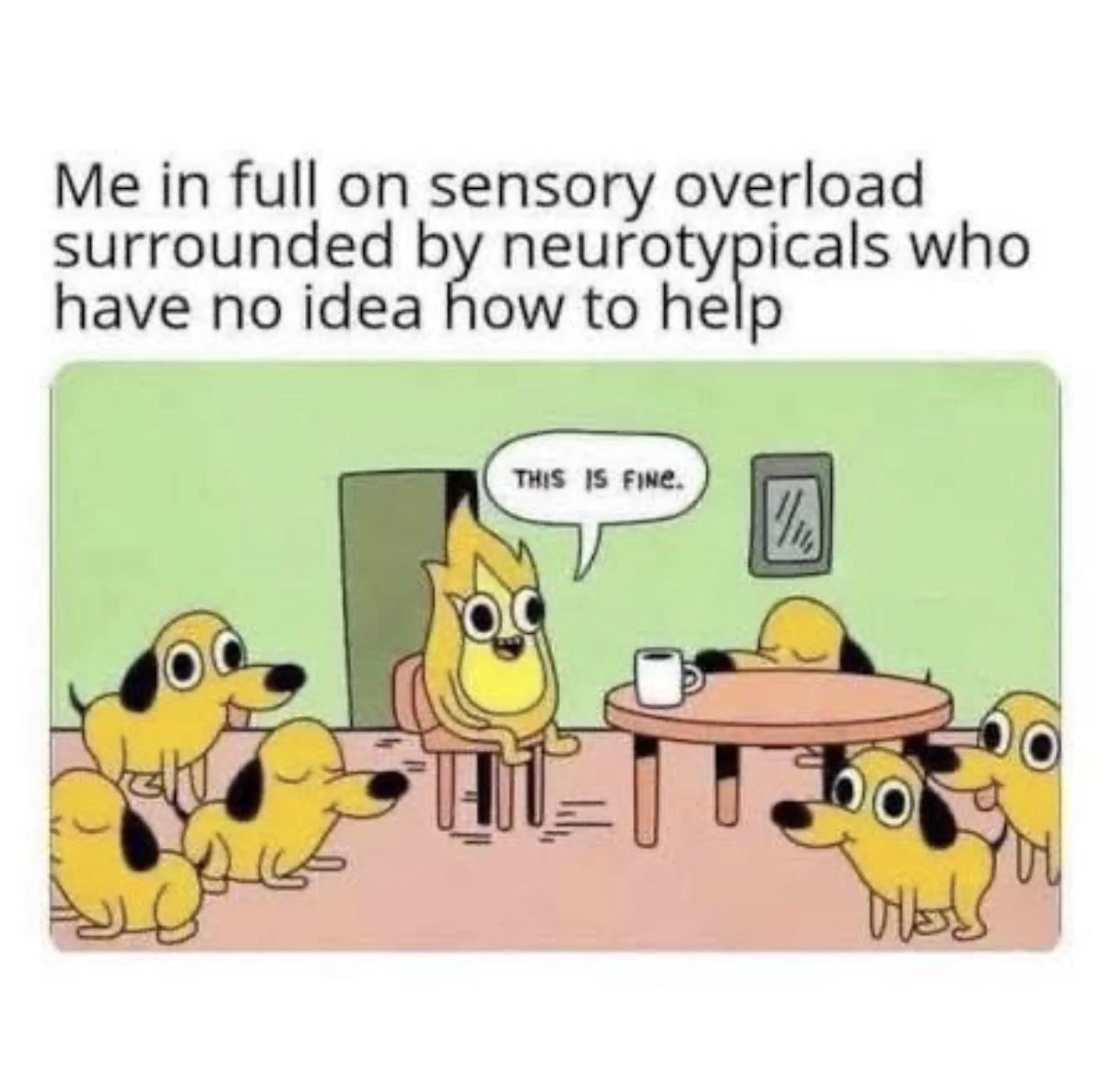
A small flame sits on a chair with a mug on a table nearby, while little dogs run all around. The flame says “This is Fine” and the image header says. “Me in full on sensory overload surrounded by neurotypicals who have no idea how to help.”
Children approach art with a sense of openness that adults often lose over time. Young children typically believe that anything is possible and that they are capable of creating something meaningful. In many ways, art functions similarly to play: it is a space where children experiment, imagine, and make sense of the world around them. Through artistic experiences, children can organize their sense of self, explore identity, process emotions, and engage their sensory systems in ways that support overall development. When appropriate accommodations are provided, art can also be one of the most accessible forms of learning, allowing children with a wide range of abilities and communication styles to participate fully.
A trauma-responsive approach to education begins with the recognition that children are complex individuals whose ability to learn may be shaped by known or unknown experiences of stress or adversity. When educators assume that students may carry these experiences with them, it becomes possible to create learning environments that are flexible, inclusive, and responsive to individual needs. Art can be particularly valuable within this framework because it offers a low-stakes and flexible form of expression. Unlike many academic tasks, art does not rely solely on verbal language or correct answers. Instead, it allows children to meet the moment they are in. Through artistic expression, children can explore internal and external experiences, develop a sense of agency, and build confidence in their own ideas and abilities.
Creating an inclusive art classroom also requires acknowledging and supporting neurodivergent learners. Neurodivergent children frequently receive more corrective or negative messages throughout their day than their neurotypical peers. A trauma-responsive art classroom works to quietly counterbalance these messages by emphasizing safety, choice, and respect for sensory needs. When accommodations are built into the environment rather than requiring children to request them, students are more likely to feel accepted and relaxed. In this type of setting, neurodivergent children can experience pride in their creativity and identity rather than feeling pressure to conform to rigid expectations.
Clay serves as an especially powerful medium within this type of learning environment. Clay is versatile, forgiving, and accessible for a wide range of ages and abilities. It can be shaped, reshaped, and recycled repeatedly, allowing children to experiment without fear of making mistakes. The tactile qualities of clay provide rich sensory and proprioceptive feedback that many children find grounding and engaging. As a natural material, clay can also help children feel connected to the physical world in a direct and meaningful way. When fired, clay becomes durable and lasting, allowing students to see their ideas transformed into tangible objects that can be revisited over time.
Within this classroom philosophy, the teacher serves primarily as a guide and co-creator. The educator’s role is to establish a safe and structured environment, introduce techniques and materials, and support students as they develop their own ideas. Students are then invited to take what they need from the instruction and transform it into something new and personal. This balance of structure and creative freedom encourages children to take ownership of their learning while still benefiting from thoughtful guidance.
The physical environment of the classroom also plays an important role in supporting learning. Ideally, the studio space should feel calm, welcoming, and inviting so that children want to stay and explore. Simple routines, such as beginning class with a brief movement activity, can help students transition from the outside world into a focused creative space. Practices such as handwashing upon entering the studio and encouraging the use of masks when children have mild symptoms can help foster a culture of care and mutual respect, particularly for students with compromised immune systems. These small routines reinforce the idea that the classroom is a community where people look out for one another.
Ultimately, the goal of this approach is not only to help children create art, but also to help them grow into compassionate and thoughtful individuals. Artistic experiences provide opportunities for creativity, collaboration, emotional expression, and reflection. When children feel safe and supported in a creative environment, they can begin to develop confidence in themselves while also learning to respect the ideas and experiences of others. In this way, art education becomes not only a tool for creative development but also a foundation for building kindness, empathy, and community.
